Repair = More Cost-Effective
Europe aims to be fully circular by 2050. It’s a massive ambition, but also a necessary step. The Netherlands is currently leading the way in Europe in this regard, but at the same time, enormous quantities of devices are still being thrown away, devices that are often perfectly repairable.
The NOS has shared an article about new research by TNO and the Dutch Circular Economy Association (NVCE), which clearly illustrates why repair, reuse, and recycling are becoming increasingly important, not only for the environment, but also for our economy and the supply of raw materials.
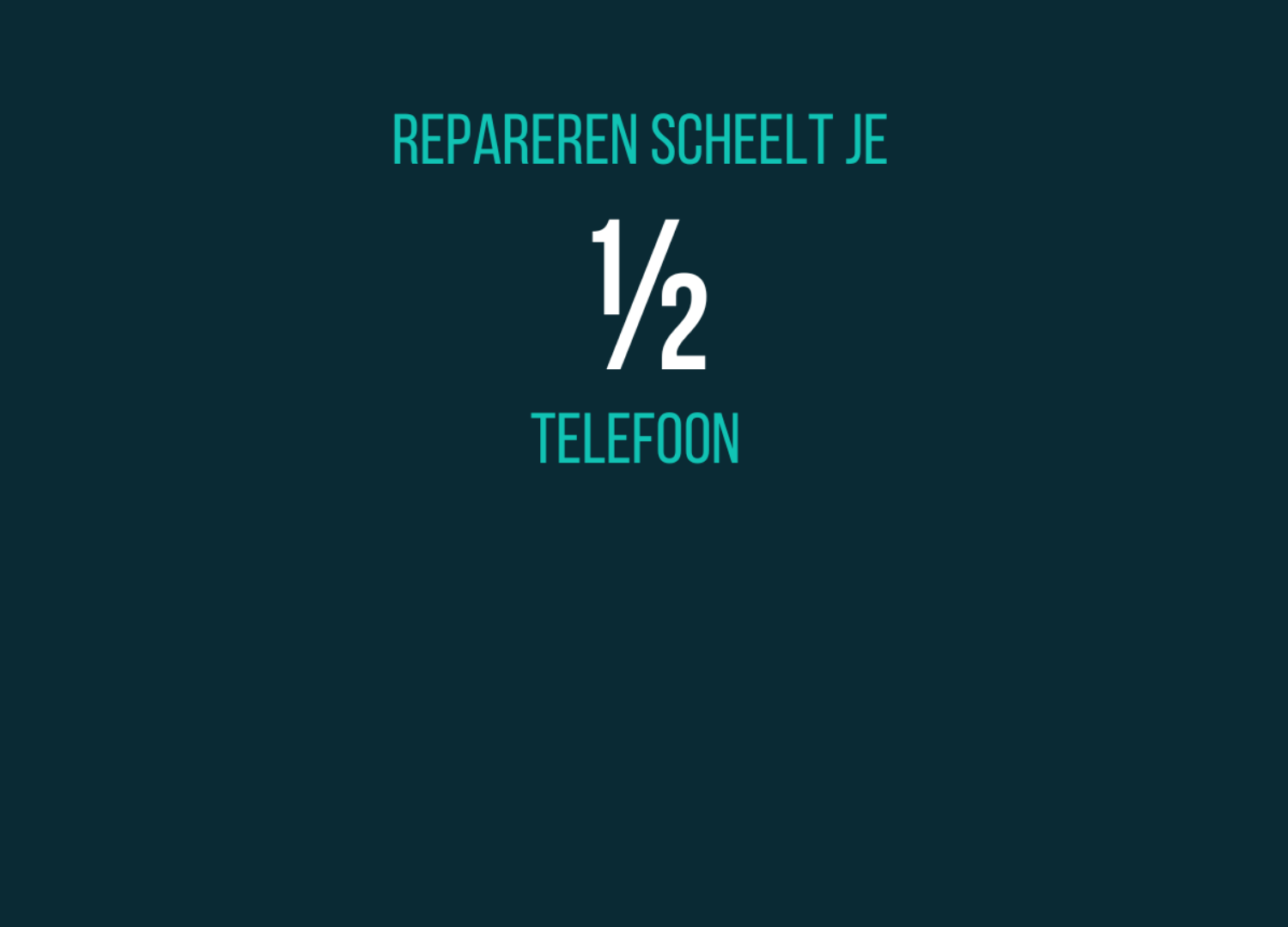
For example, the study shows that repairing a washing machine is, on average, €145 cheaper than replacing it. A repaired washing machine also lasts, on average, nearly 8 years longer. Repairing smartphones and e-bike batteries also yields financial benefits.
Without repairs, consumers would actually need an average of 1.45 smartphones and 1.85 washing machines over the same period!
And this is despite the fact that Europe is heavily dependent on other countries for many critical raw materials. As a result, valuable materials are still too often lost from the supply chain, even though they could be reused.
Read the study
Are you in?!
Do you want to speed up the transition to a circular economy with us? Do you also want to participate in one of our cool Races, or have you been inspired to set up a project together? Then contact us!
The Textile Race is made possible by Kansen voor West and co-funded by the European Union and province Noord-Holland.